Scams, in general, used to have obvious tells. Bad grammar, strange profile photos, awkward messages, poorly designed websites, static replies, fake celebrity posts that looked fake. Support accounts that felt suspicious after a few minutes. Those signs still matter, but they are no longer enough.*** Focus more on what you are being asked to do and the person asking.*** AI is making crypto scams harder to spot because it helps scammers look more polished, more personal, and more legitimate. It can generate realistic profile photos, write clean messages, translate across languages, create fake support chats, produce cloned voices, and generate deepfake videos of public figures or company executives. The result is not a new kind of scam. It is an upgraded version of old scams. The same promises still appear: - Guaranteed returns - Fake giveaways - Fake investment platforms - Fake support - Fake recovery help - Fake exchange listings - Fake celebrity endorsements - Fake romantic or personal trust-building What changed is presentation. A scam that once looked sloppy can now look professional. A fake person can now appear to speak on video. A fake support agent can respond quickly and clearly. A fake investment website can feel complete. A fake celebrity promotion can sound convincing enough to make a beginner pause. ***Do not trust something because it looks real. Verify it through independent sources before you act.*** **1: Elon Musk Deepfake Crypto Giveaway Livestreams** One of the most visible AI crypto scam patterns is the fake celebrity giveaway. A common version uses deepfake video or AI-generated audio of Elon Musk. The video may appear as a livestream on YouTube or another social platform. It may look like a Tesla, SpaceX, or tech event. It may include a QR code, a website link, and a claim that viewers can send Bitcoin, Ethereum, Dogecoin, or another crypto asset and receive double back. The scam is simple: 1. Use a recognizable public figure to create trust. 1. Make the video look live or urgent. 1. Push viewers to a website or wallet address. 1. Promise to return more crypto than the victim sends. 1. Keep the stream running long enough to catch rushed viewers. The AI makes the old giveaway scam feel more convincing because the person on screen appears to speak directly to the viewer. 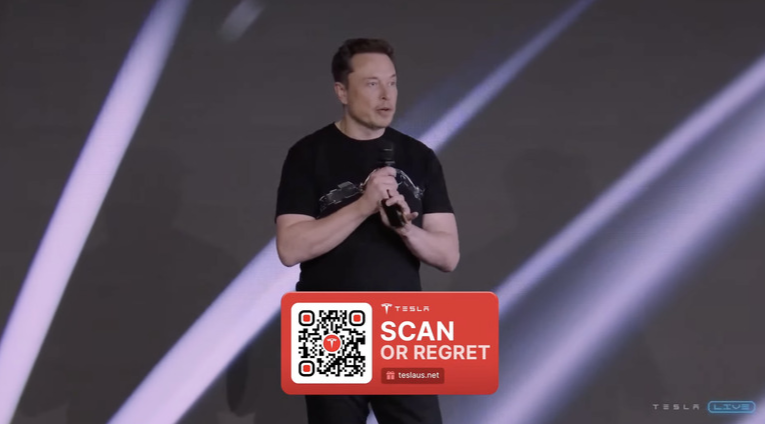 **No real giveaway requires you to send crypto first to receive more crypto back.** ** 2: Binance Executive AI Hologram Listing Scam** AI scams are not only aimed at individual beginners. They also target crypto projects and teams. In one reported case, scammers created an AI-generated deepfake of Binance executive Patrick Hillmann. They used previous public interviews and media appearances to make it appear as if he was attending online meetings with crypto project teams. The goal was to make victims believe they were discussing potential Binance listing opportunities. This matters for beginners because it shows how far impersonation can go. A scammer no longer needs to create only a fake profile or fake email. They may be able to create a convincing video presence of a real person targeting the value chain. If that can fool crypto project teams, beginners should not rely on video alone as proof. 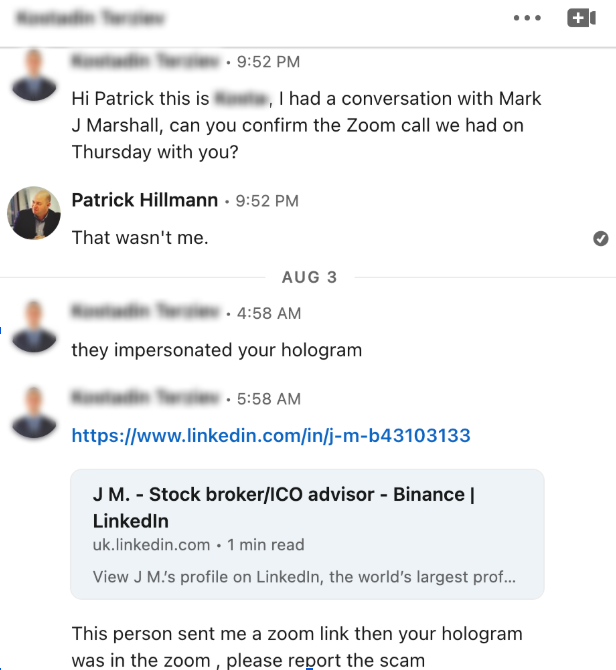 A face on a video call is not enough. Verify identity through official channels. [](https://cryptostoicmedia.com/) ** 3: Hong Kong Deepfake Crypto Romance Scam** AI is also making relationship-based scams more convincing. Hong Kong police dismantled a cross-border crypto romance scam that reportedly used deepfake technology to create convincing online identities. Victims were drawn into fake relationships, then pushed toward bogus cryptocurrency investments. This type of scam is often called* romance-investment fraud* or *pig butchering.* The scammer does not immediately ask for money. Instead, they build trust over time. They may send polished photos, voice messages, or video clips. They may claim to be financially successful. They may introduce a fake trading platform later, after emotional trust has been built. *AI improves the scammer’s ability to appear real.* A fake profile can now have realistic images. Messages can sound natural. Translation can improve. Video or voice content can reduce suspicion. The victim may feel they are interacting with a real person because the scam has more human detail than before.  **If an online relationship leads to crypto investment, stop and verify before sending anything.** ** 4: AI-Powered Crypto Investment Scam** Spanish police reportedly arrested several people connected to a large AI-powered investment scam that used deepfake ads featuring public figures to lure victims into fraudulent crypto investments. The pattern was familiar: 1. A victim sees a convincing ad or promotion. 1. The ad appears to feature a trusted public figure. 1. The victim is sent to a fake investment platform. 1. Fake advisors guide the victim to deposit funds. 1. The platform shows fake gains. 1. Withdrawals become difficult or impossible. 1. The victim may later be contacted again by fake recovery agents. This is important because AI can now help scammers build the full funnel:* the ad, the celebrity endorsement, the platform copy, the advisor script, the fake documents, and the recovery follow-up. * 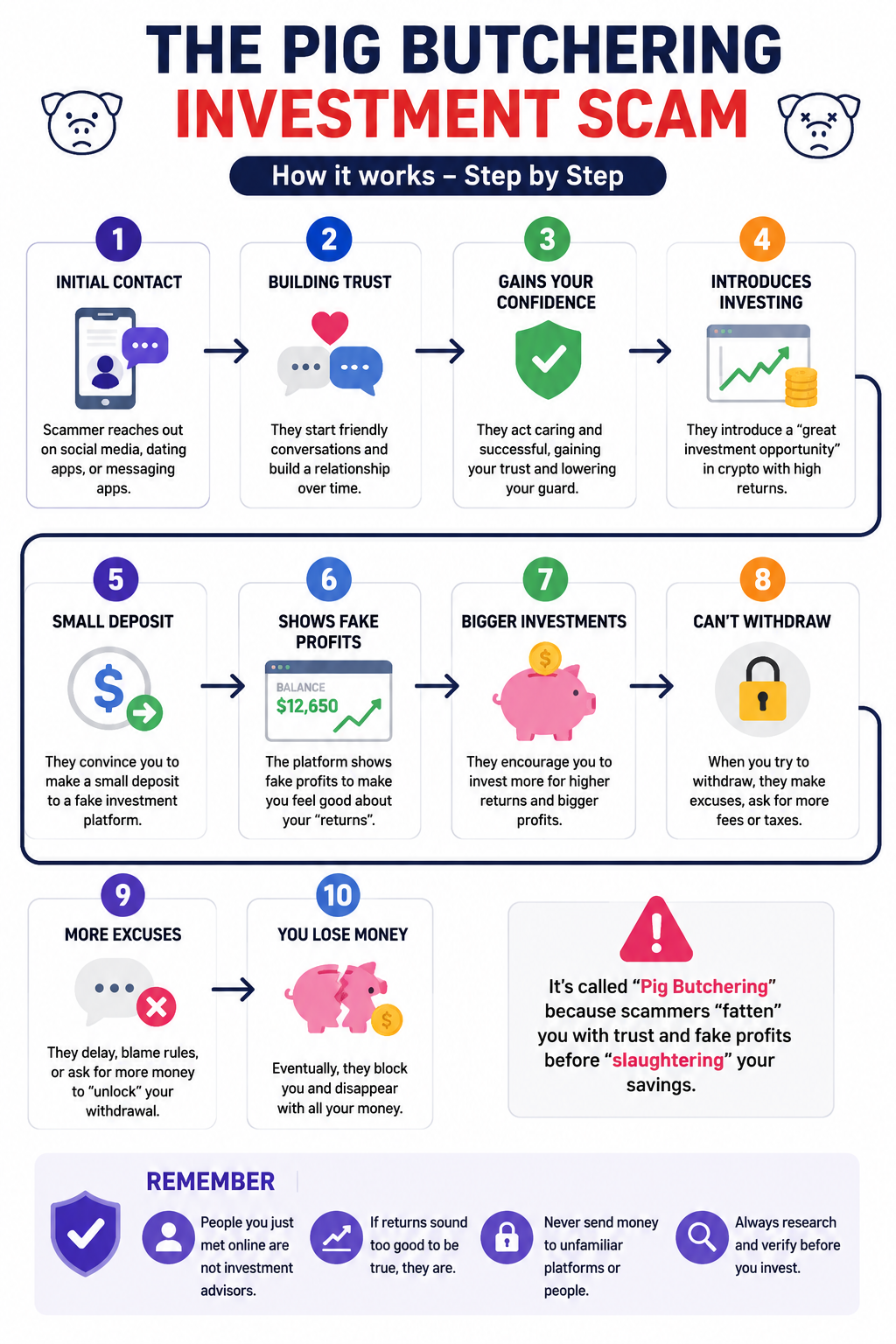 The scam does not rely on one lie. It creates an entire environment. A convincing ad is not due diligence. Verify the platform before sending money. **5 Red Flags Common in AI Crypto Scams** AI can change how a scam looks, but it does not change the core warning signs. **1. The offer requires you to send crypto first** This includes “send one, receive double,” giveaway deposits, verification payments, activation fees, or deposits required before you can access rewards. **2. A familiar face is used as proof** A celebrity, founder, exchange executive, influencer, or romantic contact may appear convincing on video or audio. Appearance is not proof of authenticity. **3. The opportunity is urgent or private** Countdown timers, expiring rewards, private listing access, secret investment groups, and “do not tell anyone” instructions are all pressure tactics. **4. A platform shows smooth profits but blocks withdrawals** Fake dashboards often show steady gains to build confidence, then require taxes, fees, or more deposits before withdrawals are allowed. **5. The request asks for wallet control or sensitive information** Seed phrases, private keys, wallet connections, token approvals, remote access, and account credentials are high-risk requests. If AI makes something look real, ignore the appearance and focus on the request. [](https://cryptostoicmedia.com/#pricing) **5 Protection Techniques That Work Against AI Crypto Scams** These techniques apply whether the scam uses a deepfake video, cloned voice, fake chatbot, fake profile, or polished investment site. **1. Verify through official sources only** Check the official website, verified social channels, support pages, or known business channels. Do not rely on links inside videos, DMs, ads, comments, or private chats. **2. Refuse send-first offers** No legitimate giveaway, reward, or promotion should require you to send crypto first to receive more crypto back. **3. Separate identity from action** Even if a person appears real, ask what they want you to do. It always boils down to what type of action you are expected to take. **4. Pause before wallet interaction** Do not connect, sign, approve, or send from a link you did not independently verify. If a wallet prompt appears unexpectedly, reject it. **5. Get a second opinion before moving money** Before sending funds to a platform, advisor, romantic contact, recovery service, or giveaway address, stop and ask a trusted source outside the situation. Scammers always want to keep you isolated. ***Verify the source. Question the request. Refuse urgency. Protect your wallet.*** 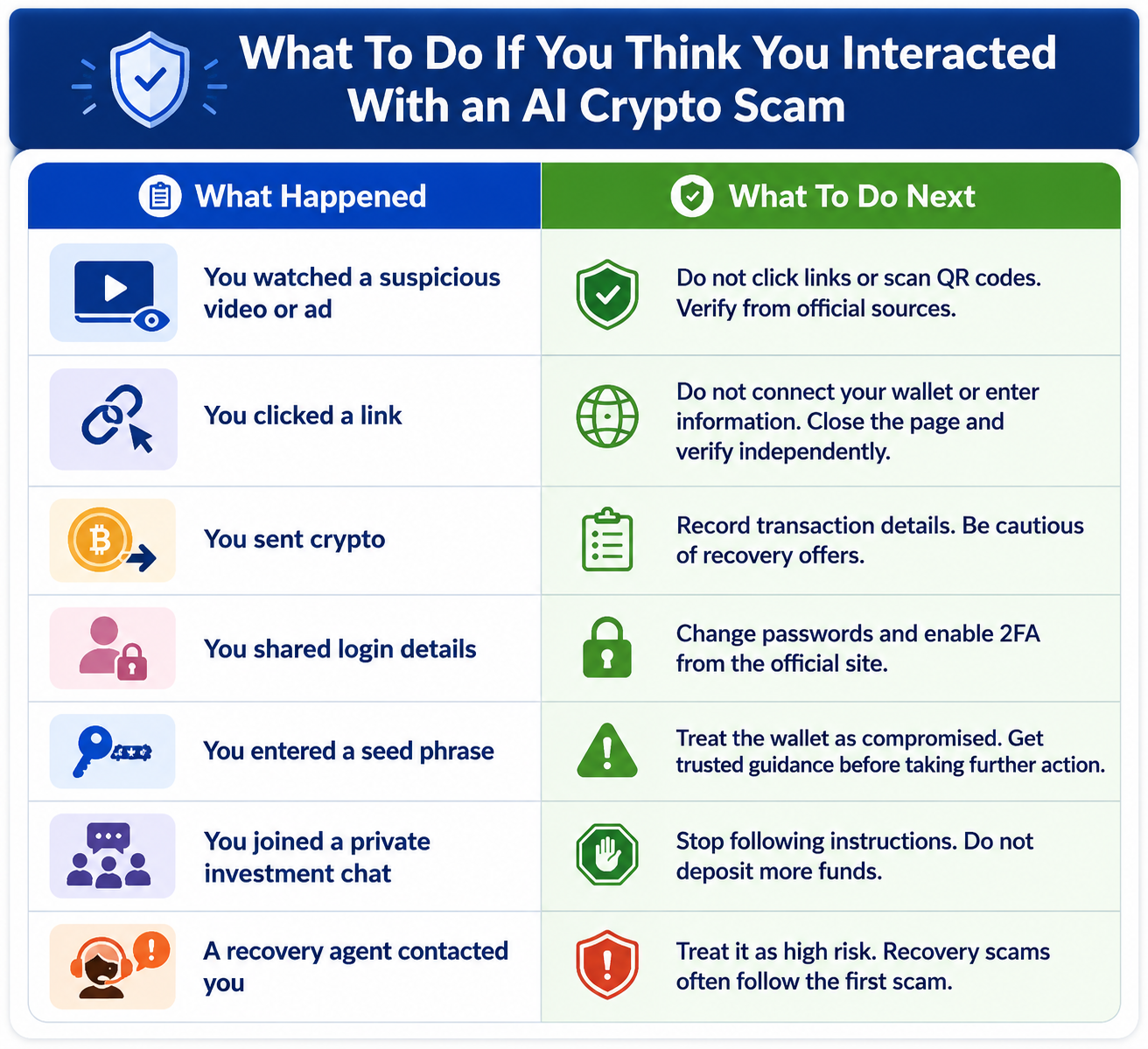 **After one suspicious action, do not rush into the next instruction. Stop and verify.** AI Can Fake Trust, But It Cannot Change the Red Flags AI makes crypto scams look more believable. A fake CEO can appear to speak. A fake celebrity can promote a fake platform. A fake romantic contact can look real. A fake support agent can respond clearly. A fake investment website can look polished. But the red flags remain consistent. ***Urgency is still a warning sign.*** The safest response is not to become a deepfake expert. The safest response is to build a verification habit. Verify the source. Question the request. Refuse urgency. Protect your seed phrase. Never send crypto to receive more crypto back. AI can fake trust. Your process is what protects you. **Want a safer way to evaluate crypto messages, links, and wallet prompts?** Member Guides walk you through safer first actions step by step — including wallet setup, test transactions, exchange withdrawal checks, and wallet approval review. [](https://cryptostoicmedia.com/#pricing)