For years, one of the most dangerous moments in crypto has looked deceptively simple: A wallet opens. A transaction appears. The user clicks Approve. In many major crypto incidents, the final point of failure is not always a smart contract bug. It is often a user, employee, or signer approving something they did not fully understand. The Ethereum Foundation’s recent Clear Signing announcement describes blind signing as a structural flaw that has contributed to billions in user losses. For safety-first beginners, this matters because your wallet approval screen is supposed to be your last line of defense. If that screen is confusing, incomplete, or written for machines instead of humans, then the “approval” is not truly informed. That is the problem Clear Signing is trying to solve. ### What Is Blind Signing? Blind signing happens when you approve a transaction without being able to clearly understand what the transaction will do. Instead of seeing something like: Swap 1,000 USDC for at least 0.42 WETH on Uniswap V3 you may see: 0x414bf389000000000000000000… 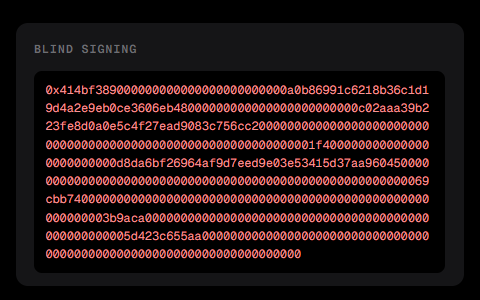 That raw transaction data may be technically accurate, but it is not useful to most users. The Clear Signing project compares this to signing a blank check, because the signer cannot easily verify the real intent of what is being approved. This is exactly why beginners are vulnerable. They may believe they are approving a simple login, claim, swap, transfer, or token interaction, while the transaction may actually grant access, move assets, or interact with a malicious contract. **Do not approve what you cannot explain.** The problem is that today, many users cannot explain what they are approving because the wallet does not show the transaction in plain language. That creates a dangerous gap: 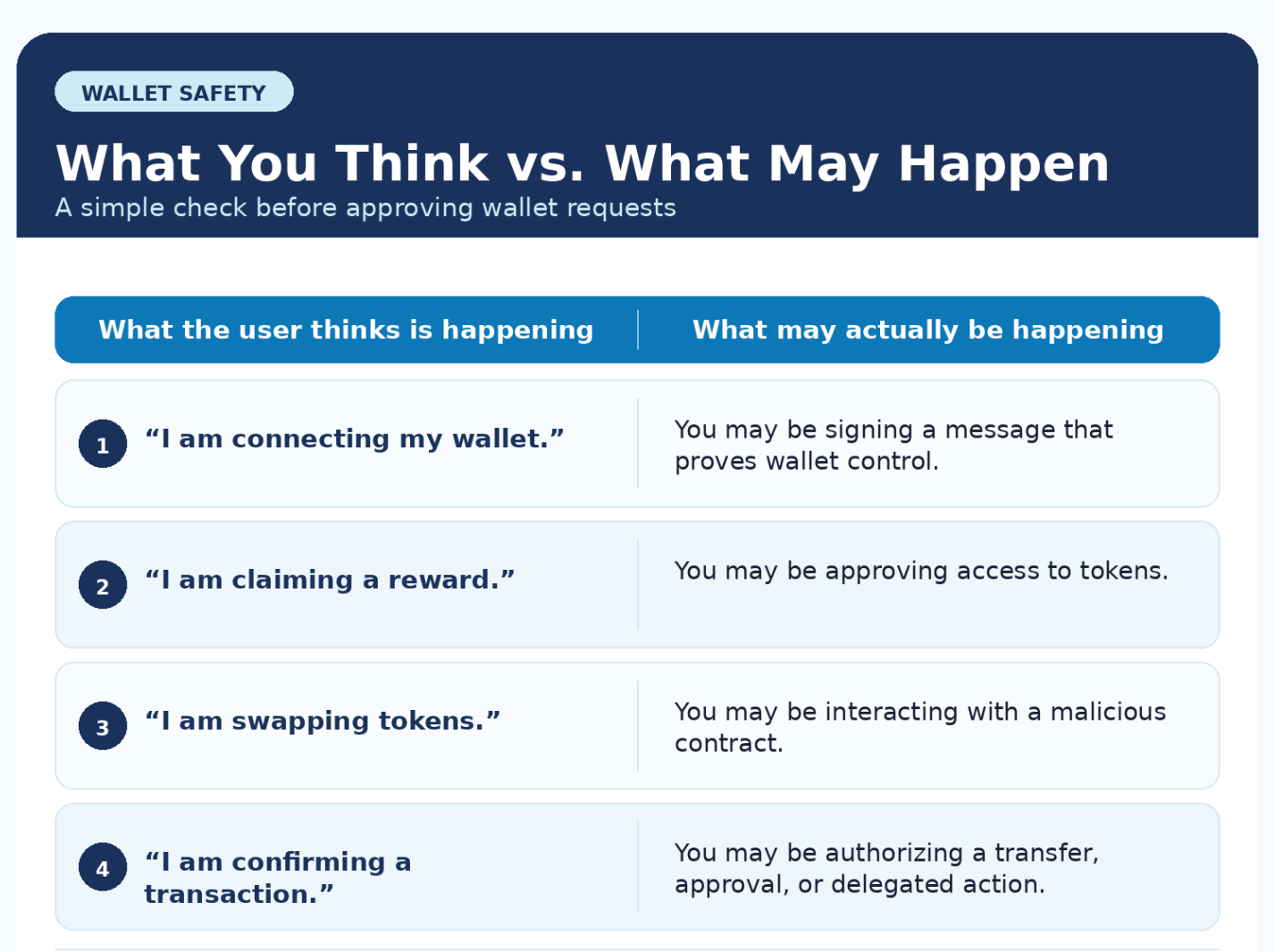 In crypto, approvals are serious because transactions are often irreversible. Once a malicious approval is signed, the user may not be able to recover the funds. ### What Clear Signing Is. [Clear Signing](https://clearsigning.org/) is a standard for making wallet transaction approvals human-readable. Instead of showing users raw transaction data, wallets can use Clear Signing to display the transaction in a structured, understandable way. In simpler terms: **ERC-7730 helps translate raw transaction data into clear transaction intent.** So instead of asking a user to approve unreadable calldata, a wallet could show: 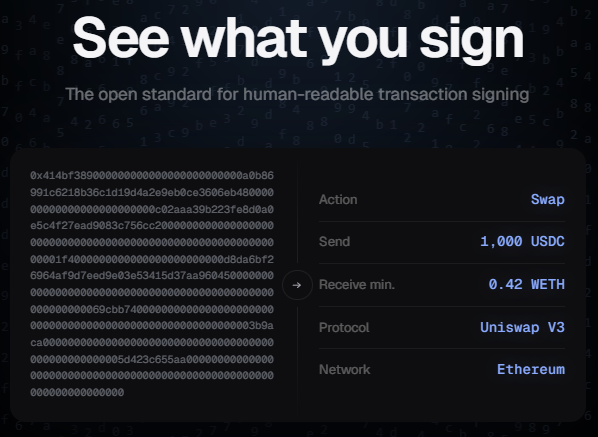 The Ethereum announcement frames the goal as **WYSIWYS: What You See Is What You Sign.** ### The Standard Behind It: ERC-7730 The technical standard behind this effort is **ERC-7730.** ERC-7730 provides a structured way for applications to describe what their transactions do. Wallets can then use those descriptions to present clearer approval screens to users. In simple terms: **ERC-7730 helps translate transaction data into plain-language transaction intent.** This matters because Ethereum applications are not all built the same way. Without a shared standard, each wallet or app may display transaction information differently. That inconsistency creates confusion. A shared standard helps wallets, applications, and security reviewers work from the same structure. ### How the System Works Clear Signing uses descriptors. These descriptors are structured files that explain how a transaction should be displayed to the signer. According to the Clear Signing overview, ERC-7730 metadata maps raw transaction data into human-readable descriptions. Wallets can then use that metadata to render clearer signing screens. The process looks like this: 1. A protocol or contributor writes a descriptor. *The descriptor explains how a transaction should appear to users.* 2. The descriptor is published *It can be submitted to an open registry.* 3. Reviews and attestations help verify quality. *Independent reviewers and auditors can assess whether the descriptor is accurate.* 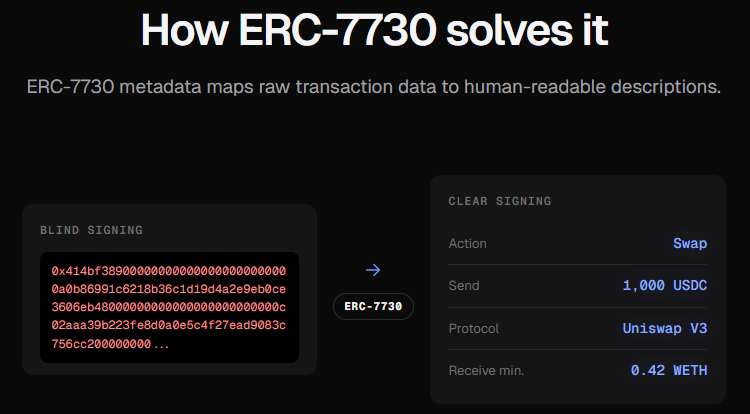 4. Wallets decide what to trust. *Wallets choose which descriptors and review signals they will rely on.* 5. The user sees clearer transaction intent *The wallet presents a more readable approval screen.* This matters because Clear Signing is not just a design improvement. It introduces a more structured way for wallets, protocols, auditors, and security teams to coordinate around safer transaction displays. Clear Signing is a major improvement, but users should not treat it as a replacement for caution. Users should not default to automatic trust, you still need safer practices. Clear Signing can help answer: ***“What does this transaction claim to do?”*** But users still need to ask: ***“Should I be doing this transaction at all?”*** A readable transaction can still be risky if: the website is fake, token is malicious, user is rushed, unsolicited transactions etc So the rule remains: *Clear signing helps you inspect. It does not replace verification.* ### What Users Should Look For Before Signing Clear Signing improves the approval experience, but users still need a safety process. Before signing any wallet request, check the following: 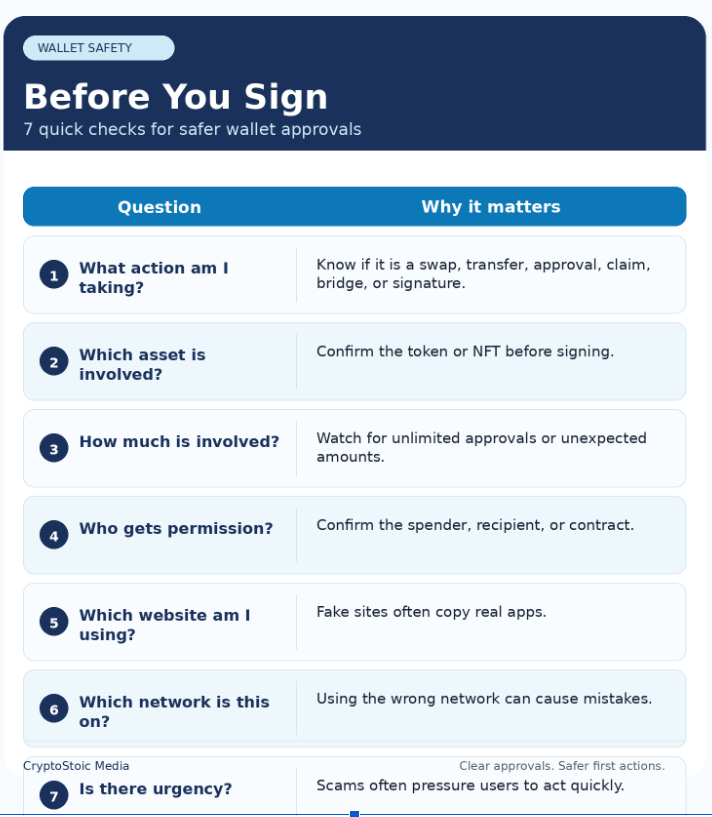 A simple rule: ***If the wallet screen does not make sense, do not sign.*** ### Before you connect, approve, or sign, use a [safety checklist.](https://cryptostoicmedia.com/) Clear Signing can make wallet approvals easier to understand, but your personal safety process is still your first line of defense. [](https://cryptostoicmedia.com/) ### Why This Is Important for Crypto Adoption Crypto cannot become safer for everyday users if wallet approvals remain confusing. For beginners, unreadable approvals create fear and mistakes. For experienced users, they create unnecessary risk. For institutions, they are unacceptable. If the [Ethereum Foundation](https://blog.ethereum.org/2026/05/12/clear-signing-announcement) and other crypto ecosystems want broader adoption, users need better signing experiences. They need wallet prompts that explain actions in plain language before irreversible decisions are made. This is especially important as more people use crypto for: - Holding assets - Sending payments - Accessing apps - Using stablecoins - Bridging funds - Managing wallets - Participating onchain The next wave of crypto users will not be protected by telling them to “be careful.” They need safer defaults, clearer interfaces, and better education. Clear Signing is part of that shift.