## Why Deep Value vs Fair Value Matters One of the most common mistakes in crypto investing is assuming that a lower price automatically means a better opportunity. Markets rarely work that way. Assets can become cheaper and still remain overvalued, while periods of extreme pessimism can sometimes create opportunities that are only obvious in hindsight. This is where understanding the difference between deep value and fair value becomes important. **Deep value **refers to periods when *fear, forced selling, and negative sentiment* have pushed prices significantly below what long-term participants may consider reasonable. **Fair value**, on the other hand, represents a more balanced environment where panic has subsided, risks are better understood, and prices more accurately reflect available information. For **Bitcoin,** identifying these phases is not about predicting exact tops or bottoms. It is about understanding *market cycles, recognizing risk-reward dynamics, and developing a framework for capital allocation* that is grounded in research rather than emotion. While no indicator can guarantee future outcomes, studying historical cycles can help investors make more informed decisions and avoid the costly mistakes that often occur during periods of market euphoria or panic. --- ### Understanding Bitcoin Market Cycles and the Role of Halvings Crypto markets do not move in straight lines, emotions have a lot to play. Bitcoin, as the oldest and most liquid crypto asset, provides one of the clearest examples of how market psychology influences price action. A ***bull market ***is not simply a period where prices rise. It is a phase where l*iquidity expands, confidence grows, narratives gain traction, leverage increases, *and *participation broadens *across the market. Conversely, a ***bear market*** is not merely a decline in price. It is a period where leverage is unwound, speculative excess is removed, narratives collapse, and even fundamentally strong assets experience significant repricing. Bitcoin's market cycles have historically been influenced by supply-side events known as *halvings. *Approximately every four years, the amount of new Bitcoin issued to miners is reduced by half. These events occurred in 2012, 2016, 2020, and 2024. While halvings reduce new supply entering the market, they do not automatically create bull markets. Demand must still emerge. [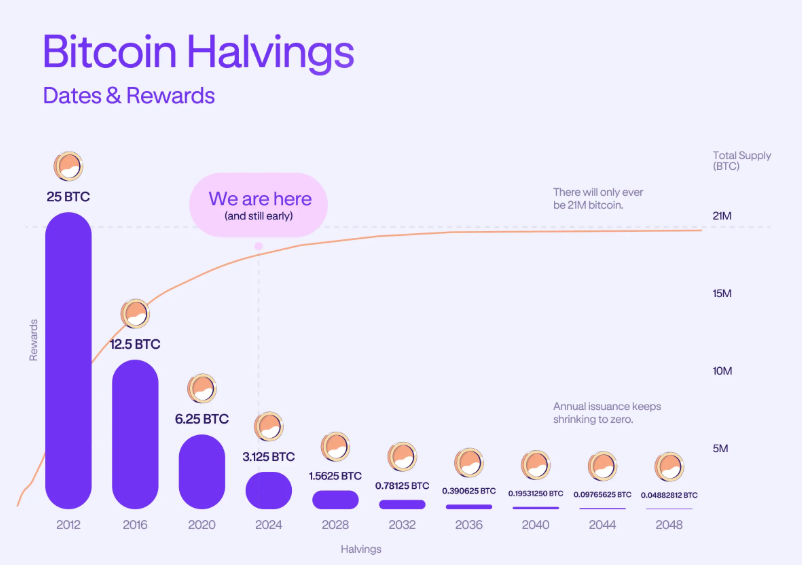](https://www.kraken.com/learn/what-is-bitcoin-halving) That demand can come from retail investors, institutional adoption, ETF inflows, favorable macroeconomic conditions, or entirely new market narratives. This is why Bitcoin cycles are useful to study but should never be viewed as guaranteed templates. History often rhymes, but it rarely repeats exactly. --- ### Deep Value vs Fair Value and How Investors Assess Market Conditions The distinction between deep value and fair value is important because many investors mistakenly equate large price declines with attractive opportunities. **Deep value** is not simply a lower price. In crypto markets, deep value often emerges when price action, investor sentiment, and on-chain metrics all indicate significant stress. These periods are characterized by widespread pessimism, underwater investors, forced liquidations, reduced leverage, and quiet accumulation by long-term participants. **Fair value **represents a different stage of the cycle. It is the point where markets have stabilized and become more rational, but have not yet entered a phase of widespread optimism or speculation. Prices may no longer reflect panic, yet they may still offer reasonable long-term opportunities. To evaluate these conditions, analysts often examine multiple indicators, including: - Drawdown from all-time highs - Realized price - MVRV (Market Value to Realized Value) - Long-term moving averages - Miner profitability and stress - ETF demand and institutional flows - Stablecoin liquidity - Broader macroeconomic conditions 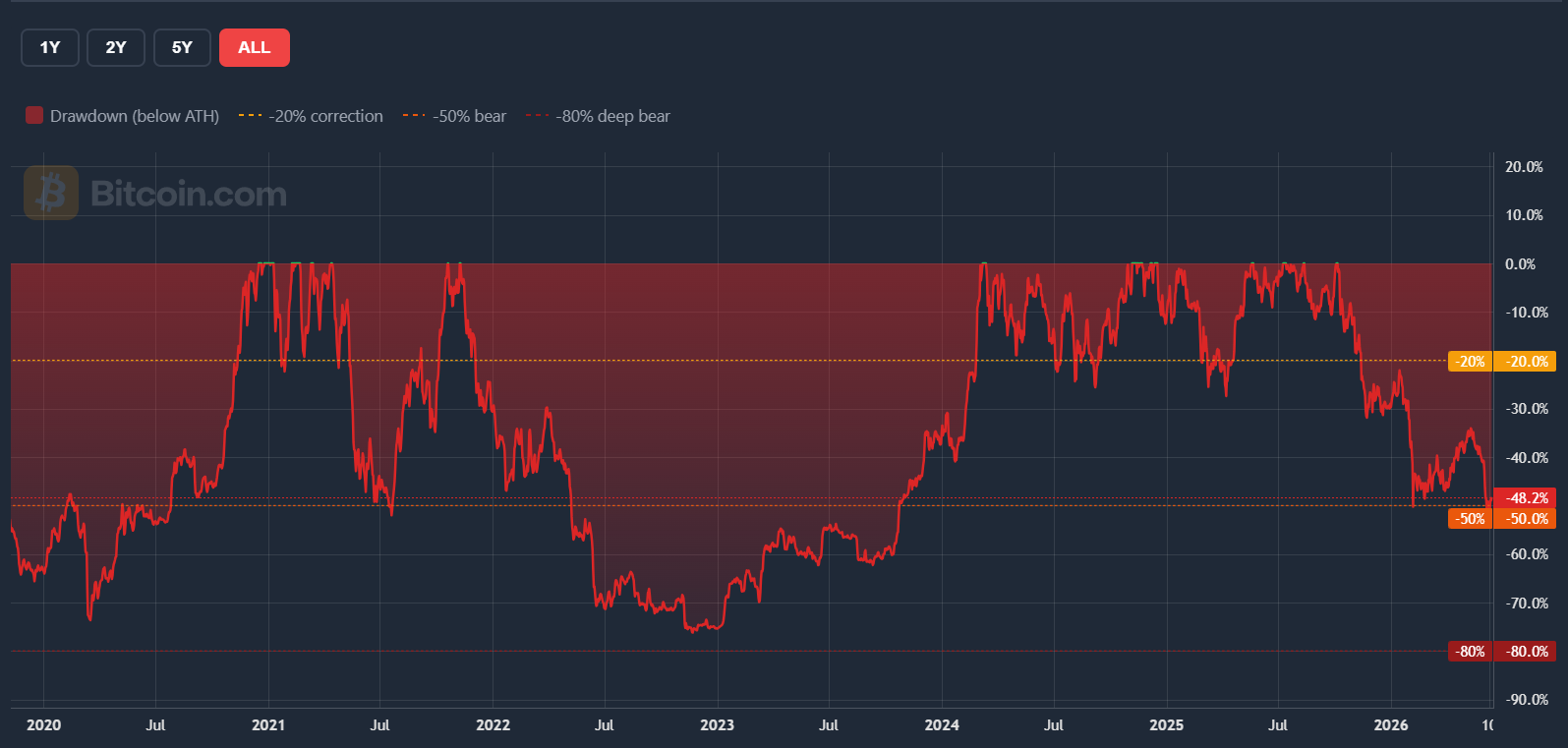 No single metric provides a complete picture. A more reliable approach is to look for ***confluence ***among several indicators. When price structure, on-chain data, liquidity conditions, sentiment, and risk management considerations align, investors can make more informed allocation decisions rather than reacting emotionally to market volatility. --- ### Historical Bitcoin Bear Markets and Early Signs of Recovery Bitcoin has historically rewarded patience while punishing poor timing, excessive leverage, and emotional decision-making. Previous bear markets have been severe. Following the 2013 cycle peak, Bitcoin declined approximately 85% before eventually finding a bottom. The 2017 cycle experienced a similar drawdown exceeding 80%. The 2021 cycle saw Bitcoin fall roughly 77% before reaching its low in late 2022. 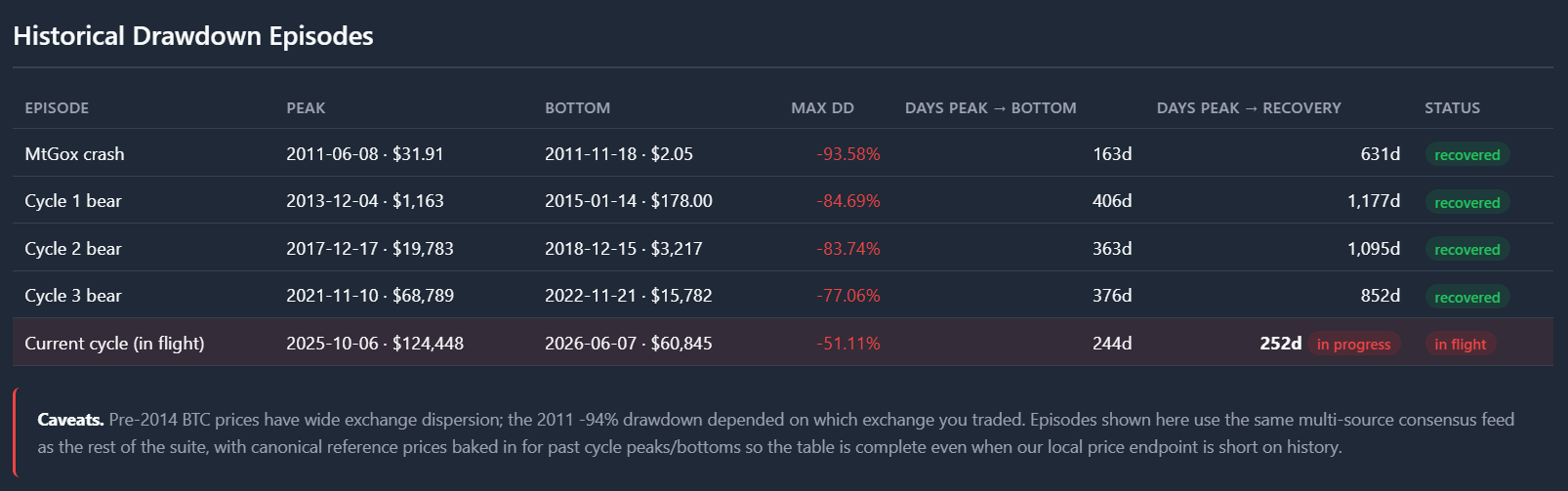 Across these major cycles, the period from peak to bottom has often lasted around 12 to 13 months, although recovery back to previous all-time highs has typically taken much longer. One of the challenges investors face is *recognizing early signs of recovery*. These signals are often subtle and unexciting: - Volatility begins to compress - Negative news loses its ability to push prices lower - Long-term holders accumulate - MVRV recovers from distressed levels - Price reclaims important moving averages - Public interest remains relatively low [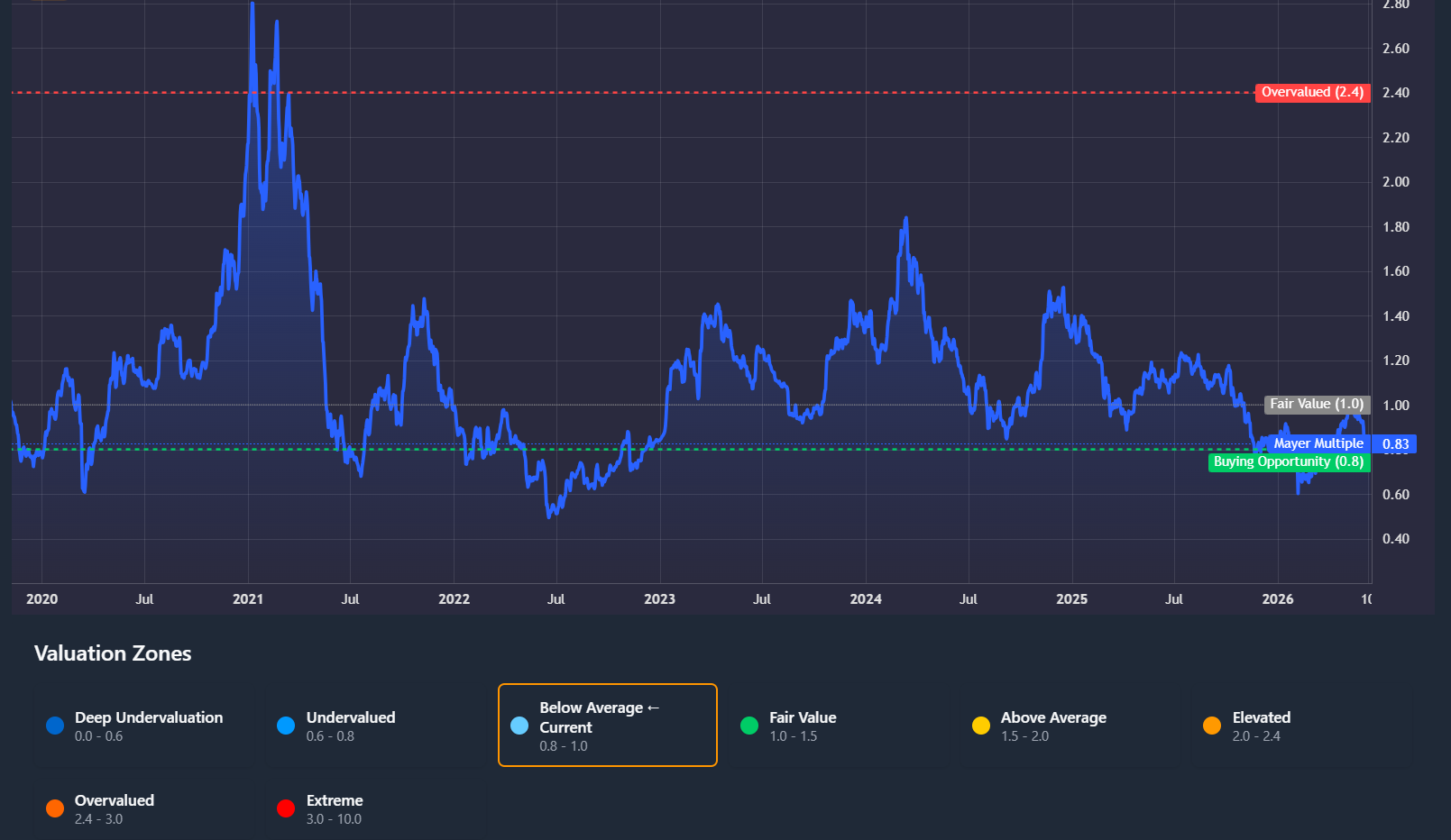](https://charts.bitcoin.com/mayer.html) Most investors seek certainty before acting. Markets rarely provide it. In many cases, the earliest stages of recovery are characterized by skepticism and disbelief rather than confidence and enthusiasm. --- ### Evaluating Whether the Market Is Recovering or Still in Transition A common question during every cycle is whether the market has finally moved beyond its bear phase. The answer depends largely on perspective. For **short-term traders**, recovery often means *trend confirmation*. They look for higher highs, higher lows, stronger liquidity, improving market breadth, and sustained price strength above key technical levels. **Long-term investors** often approach the question differently. Rather than asking whether the exact bottom has already occurred, they focus on whether the overall risk-reward profile has improved enough to justify a structured allocation strategy. As of mid-2026, Bitcoin remains significantly below its previous cycle peak despite recovering from earlier lows. This creates an environment where opinions differ. Some investors view the market as offering deep-value opportunities created by fear and uncertainty. Others believe the market has already repriced much of the risk and now sits closer to fair value. What matters most is avoiding urgency. Investors who feel pressured to act immediately often make decisions based on emotion rather than analysis. Successful capital allocation is rarely about finding the perfect entry point. It is about building a process that can withstand uncertainty and adapt as conditions evolve. [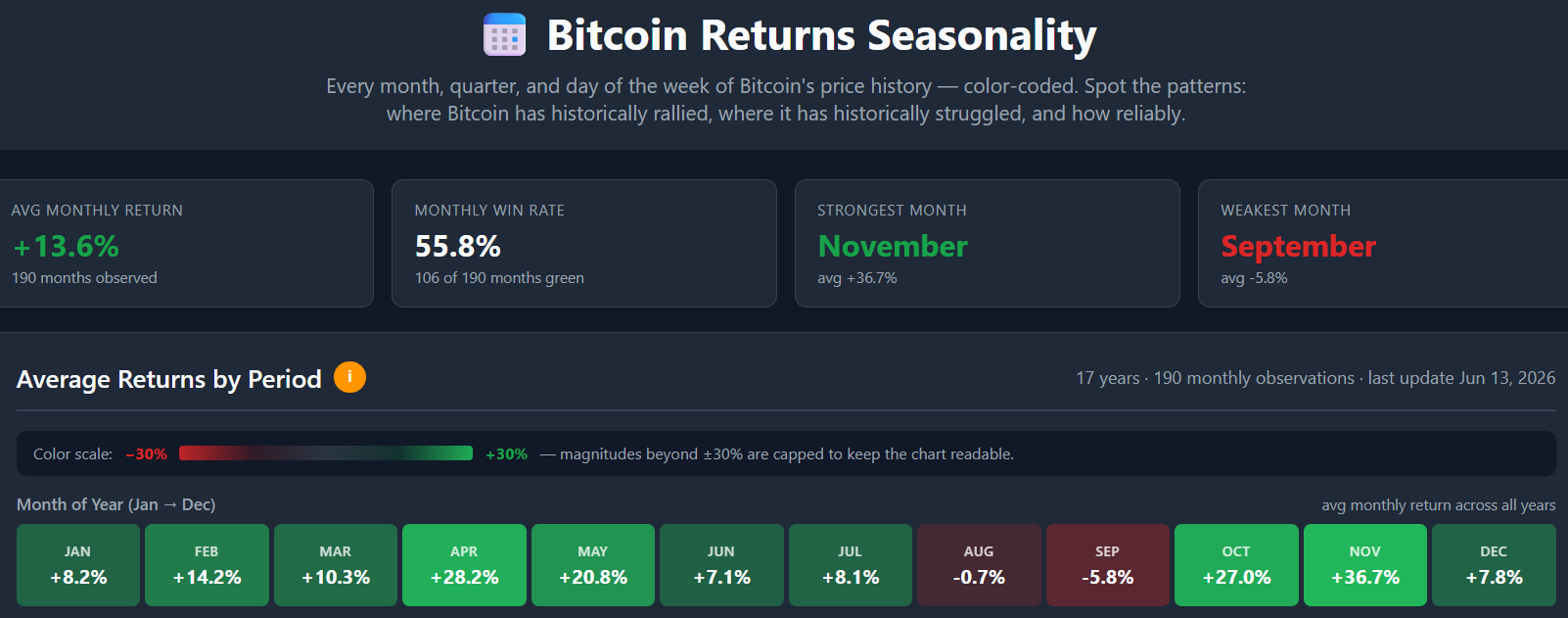](https://charts.bitcoin.com/returns-seasonality.html) --- ### DYOR, Anchor Portfolios, and Building a Disciplined Investment Process You will never truly have log term conviction without a thesis you have personally arrived at based on research. This is where DYOR—Do Your Own Research—becomes more than a popular phrase. Real research is not consuming content that confirms existing beliefs(confirmation bias). It involves developing a clear investment framework before capital is committed. If all you do is look for like-minded people to agree with, then be ready for the consequences. A disciplined research process should include: 1. A clearly defined investment thesis 1. Conditions that would invalidate that thesis 1. Appropriate position sizing 1. A custody and security plan 1. A realistic time horizon 1. Defined profit-taking and risk-management rules > Bear in mind, markets evolve and your fundamentals may change leading you to make changes. That is ok so long as its process oriented, and not hype or FOMO driven. For many beginners, an anchor portfolio can provide a practical foundation. An **anchor portfolio **is a core allocation built around assets that an investor understands and can hold through periods of volatility. It is designed to reduce emotional decision-making and create consistency throughout market cycles. You are basically looking at those core assets that track or represent the entire market. It will not give you the moonshot-like returns of 100x, but it will preserve and compound your capital. An anchor portfolio may include: - Gradual or staged capital deployment - Cash reserves for flexibility - Strong security practices - Separate wallets for different purposes - Written rules that define when not to act The goal is not to perfectly time market bottoms or tops. The goal is to create a repeatable process that protects capital and supports long-term participation. In crypto, the greatest advantage is rarely prediction. It is ***preparation.*** Deep value may create opportunity. Fair value may provide structure. But only a disciplined process can help investors navigate both successfully. --- The question is not whether **Bitcoin** is at the perfect buying point today. The more important question is whether current market conditions align with your research, risk tolerance, and long-term strategy. Deep value and fair value are not signals—they are frameworks for understanding market conditions. The investors who survive multiple cycles are often those who focus less on prediction and more on preparation. If you are struggling to answer the question of if the current price of Bitcoin is at Deep or Fair Value, [here](https://charts.bitcoin.com/)is a list of useful tools to help with that. And, if you are looking for a community that focuses on *preparation over price prediction*, feel free to [download](https://cryptostoicmedia.com/) our *Crypto Safety Kit*. [](https://cryptostoicmedia.com/)